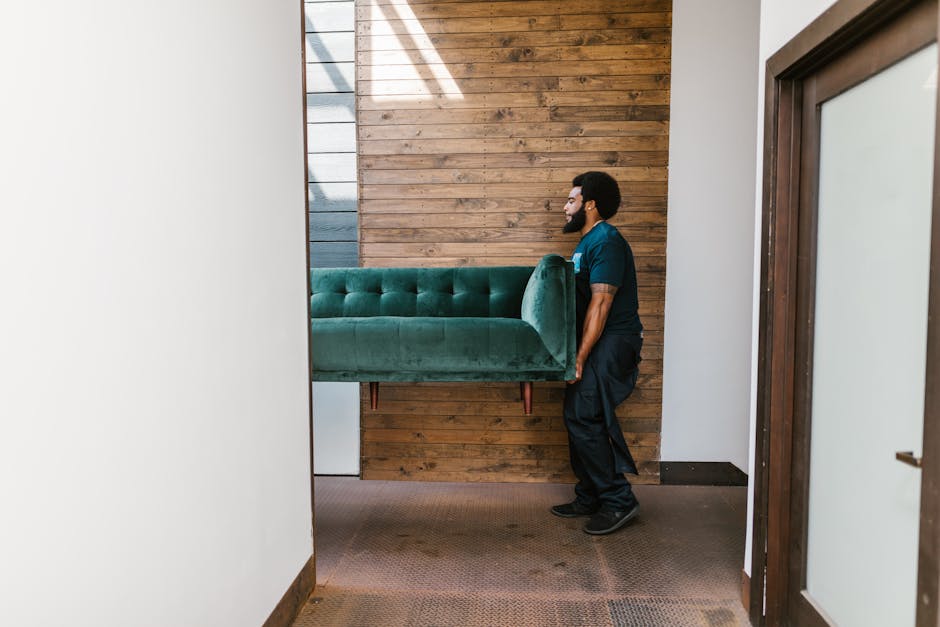
Access issues for large furniture removals in Enfield estates

Large furniture removals in Enfield estates can look straightforward on paper and then quickly turn into a puzzle in real life. A sofa that seemed fine in the showroom suddenly meets a tight stairwell. A wardrobe that was "definitely coming apart" turns out to be awkwardly fixed. The lift is small, the parking is awkward, and the route from van to front door feels longer than it should. If you are dealing with access issues for large furniture removals in Enfield estates, the good news is that most problems can be managed with the right planning.
This guide explains what access problems usually involve, why they matter, how removals teams work around them, and what you can do before moving day to avoid stress, damage, and wasted time. We will also look at practical tools, best practices, and a simple checklist you can use whether you are moving a single bulky item or a full flat's worth of furniture. Let's face it, moving heavy furniture is rarely glamorous - but with good preparation, it does not need to be chaos either.
- Why this matters
- How access issues are handled
- Key benefits and practical advantages
- Who this is for
- Step-by-step guidance
- Expert tips
- Common mistakes to avoid
- Tools, resources and recommendations
- Law, compliance and best practice
- Options and comparison table
- Case study example
- Practical checklist
- Conclusion
- Frequently asked questions
Why Access issues for large furniture removals in Enfield estates Matters
Access is often the hidden factor that decides whether a removal runs smoothly or turns into a long, expensive day. In many Enfield estates, the challenge is not the size of the furniture alone. It is the combination of narrow communal corridors, stair-only blocks, parking restrictions, shared entrances, awkward turns, and time-limited loading space. One small obstacle can change the whole plan.
Why does this matter so much? Because large furniture is unforgiving. A sofa is not like a box of books. A wardrobe will not politely bend around a bannister. A bed base can snag on a corner. And once you are halfway down a stairwell, changing your mind is not exactly convenient.
Good access planning protects three things:
- Time - fewer delays, less waiting around, and a more predictable move.
- Safety - fewer risks of injury to the movers and damage to walls, doors, or flooring.
- Cost - less chance of extra labour, repeat visits, or avoidable storage and vehicle issues.
For estate moves, this is even more important because one blocked passage or a badly parked van can affect neighbours, building managers, or the whole loading bay. In our experience, the moves that feel calm are not the ones with no problems at all. They are the ones where somebody asked the right questions before the van arrived.
Expert summary: the best furniture removals are not always the fastest on the day; they are the ones that were planned around the actual access, not the ideal version of it.
How Access issues for large furniture removals in Enfield estates Works
Handling access issues usually starts with a simple assessment. The removals team looks at the item, the building layout, the available parking, and the route in and out. That may sound obvious, but it is surprising how often people skip straight to "Can you collect it?" without measuring the tricky parts.
Here is what a sensible access check normally covers:
- Measure the item - height, width, depth, and any parts that jut out, like handles or feet.
- Measure the route - doorways, hallways, stair landings, lift size, corner turns, and any tight communal spaces.
- Check outside access - kerb space, estate roads, parking rules, and how close the van can legally get.
- Identify obstacles - low ceilings, shared bins, railings, intercoms, coded entrances, or narrow fire doors.
- Plan the method - dismantling, two-person carry, protective wrapping, trolley use, or a smaller vehicle transfer.
On estate moves, the plan may need to change on arrival. That is normal. A communal lift may be smaller than expected. A driveway may be blocked by another vehicle. A wardrobe may need partial dismantling after all. A good team adapts without making a drama of it. Not every move goes to script, and honestly, that is part of the job.
If the route is especially tight, the team might split the job into stages: furniture is collected in the van, then transferred into storage, another property, or a different access point later. If you are looking for a flexible option while sorting out home space or timing, services like removals and storage can help bridge the gap when a full direct move is not practical.
A related point worth noting: access planning is not only about the property you are leaving. The destination matters too. A perfectly manageable pickup can still go wrong if the delivery address has stricter parking or a tighter staircase.
Key Benefits and Practical Advantages
Getting the access plan right delivers more than just convenience. It changes the whole experience of moving bulky furniture, particularly in estates where space is limited and shared areas matter.
1. Less risk of damage
Furniture is expensive enough already. Scratched veneer, torn fabric, broken feet, chipped walls, and damaged bannisters are the kind of problems nobody wants after an already stressful day. Careful access planning helps prevent those small disasters that add up fast.
2. Better use of time
When the route is clear and the team knows the challenges in advance, the work tends to move more efficiently. That means less standing around, fewer awkward pauses, and fewer "let's just try it this way" moments.
3. Lower likelihood of last-minute surprises
A remover who has been told about a fourth-floor flat with no lift can bring the right equipment and enough people. That sounds basic, but it saves a huge amount of stress.
4. More accurate quoting
Access problems often affect cost because they affect labour time, vehicle choice, and handling requirements. Giving accurate information helps avoid the awkward moment where the price changes halfway through the job. And nobody enjoys that conversation.
5. Better neighbour and estate relations
Estate moves can be disruptive. A well-managed job keeps hallways clear, reduces congestion, and minimises complaints. That matters more than people think, especially in buildings where everyone notices everything.
There is also a quieter benefit: peace of mind. Once you know someone has thought through the tight corners, parking, and heavy lifting, the day feels less like guesswork and more like a plan.
Who This Is For and When It Makes Sense
This topic matters to a wide range of people. If your furniture is big, awkward, heavy, valuable, or simply too good to risk dragging through a narrow estate stairwell, this is for you.
- People moving home in flats, maisonettes, or estate blocks with limited access.
- Landlords and letting agents arranging bulky item removals between tenancies.
- Students or sharers moving larger pieces into or out of compact accommodation.
- Families downsizing who need help with beds, wardrobes, dining tables, and sofas.
- Businesses relocating furniture from offices, storage rooms, or reception areas.
- Anyone using storage because the new home, flat, or estate layout is not ready for everything at once.
It also makes sense when the furniture itself is a bit awkward. Flat-pack items are one thing. Solid wood wardrobes, large corner sofas, marble-topped tables, and oversized cabinets are another. If the item is too large to turn comfortably, you are already in access-planning territory.
Sometimes people assume a simple man-and-van style move will be enough. It can be, for the right job. But if you know the access is tight, it is worth exploring options such as man and van for smaller or more flexible loads, or house removals where a fuller service is more suitable. The point is not to overspend. It is to match the service to the reality of the building.
Truth be told, a lot of the stress disappears once you stop pretending a huge wardrobe is "basically fine" and admit it may need a proper plan.
Step-by-Step Guidance
Here is a practical way to handle access issues before the moving team arrives. Nothing fancy. Just the sort of process that saves headaches later.
1. Measure the furniture properly
Do not rely on memory or a quick glance. Measure height, width, depth, and any protruding parts. If the item can be dismantled, note which sections come apart and whether screws or fittings are missing. A tape measure is boring, yes, but it earns its keep.
2. Measure the route, not just the room
Measure doors, hallways, stair turns, landings, lift openings, and the space around the front door. A piece may fit in the room yet fail at the first corner. That is usually where the fun ends.
3. Check the outside access
Can a van stop close enough? Is there a loading bay? Are there resident-only parking spaces or enforcement times? In some estates, access is fine until someone parks right where the job needs to start. It happens.
4. Confirm building rules
Ask whether the building has lift booking rules, moving time restrictions, noise rules, or requirements for protecting communal areas. Some blocks have very specific expectations. Knowing them in advance keeps things smooth.
5. Share photos or a short video
This is one of the simplest ways to reduce misunderstandings. A few photos of the furniture, the hallway, the stairs, and the entrance can tell a remover more than a page of text. If you are unsure, send extra detail. Better too much than too little.
6. Decide whether dismantling is needed
If the item can come apart safely, dismantling may be the difference between a clean move and a very awkward one. Keep fittings together in a labelled bag. Small step. Big difference.
7. Protect the route
Use floor coverings, corner guards, and padding where needed. In shared estates, this is not just about keeping your own place neat. It is about respecting communal property too.
8. Build in time for delays
Estate moves often take a little longer than expected. Lift delays, parking issues, or a tight squeeze can slow things down. Give yourself breathing room. Moving day is not the best day to be on a strict stopwatch.
That workflow sounds simple, but it prevents most avoidable problems before they start. And once the move begins, you want the team focused on safe handling, not detective work.
Expert Tips for Better Results
These are the practical habits that tend to make the biggest difference on estate moves.
- Tell the truth about access. If the stairwell is tight, say so. If parking is uncertain, say so. Nobody benefits from optimism that turns into a bottleneck.
- Separate "fits in theory" from "fits in practice." A sofa may fit on paper and still snag on a handrail. Actual movement matters more than measurements alone.
- Keep communal areas clear. Hallways fill up quickly when a bulky item is being manoeuvred. Clear bins, coats, prams, and loose objects beforehand if possible.
- Use the right equipment. Furniture blankets, straps, sliders, trolleys, and gloves are not optional extras on difficult access jobs. They are what make awkward moves manageable.
- Consider timing carefully. Early morning may be quieter for access and parking in some estates. Midday can be busier. There is no universal perfect time, but timing matters.
- Ask about insurance and handling. You do not need a lecture, just clarity on what is covered and how items will be protected.
One more thing: if your large furniture is not going straight into the new property, short-term or secure storage can reduce pressure dramatically. Services such as secure storage or short-term storage can be useful when completion dates, access windows, or refurbishment work are not lining up neatly. Life rarely does, to be fair.
And yes, sometimes the best move is simply not forcing the move all at once.
Common Mistakes to Avoid
Most access problems are not caused by bad luck. They come from small oversights that seemed harmless at the time.
- Not measuring the stairwell properly. The curve of the turn matters just as much as the width of the stairs.
- Assuming the lift will fit everything. Lifts can be smaller than expected, and loading angles can make a difference.
- Forgetting about handles, feet, or headboards. These bits are often the reason an item will not pass through a doorway.
- Leaving parking until the last minute. A van that cannot stop nearby creates extra lifting, more time, and more risk.
- Ignoring building rules. Some estates have restrictions that can delay or complicate removals if not checked in advance.
- Not communicating access changes. If a lift is broken on the day, the team needs to know immediately. Silence helps nobody.
- Choosing a service that is too small for the job. A compact item move and a bulky furniture move are not the same thing.
One surprisingly common issue is the "I thought it would fit if we just angled it" approach. Sometimes that works. Often it does not. There is a point where physics wins, and it wins quietly but firmly.
If you want to avoid cost surprises as well as access headaches, it can also help to read about common pricing pitfalls such as those covered in avoiding hidden removals charges in Enfield. Not every move is expensive, but unclear expectations can make any move feel more expensive than it needs to be.
Tools, Resources and Recommendations
You do not need a van full of specialist kit to solve every access problem, but the right tools make a real difference. A good removals team will normally bring a mix of practical equipment suited to heavier or awkward furniture.
| Tool or resource | What it helps with | When it is most useful |
|---|---|---|
| Furniture blankets | Protects finishes, corners, and paintwork | Stairs, door frames, lifts, and van loading |
| Moving straps | Helps with balance and safer carrying | Large wardrobes, sofas, and mattresses |
| Trolley or sack truck | Reduces manual strain for suitable items | Short flat surfaces and predictable routes |
| Corner protectors | Limits damage in tight corridors | Shared estates and painted hallways |
| Labelled fixing bags | Keeps screws and fittings together | Any dismantled furniture |
| Storage option | Helps split the move into stages | Delayed access, refurbishment, or downsizing |
For people combining moving and storage, it can be useful to look at options like furniture storage or broader self storage. If you are moving a whole property and want one joined-up plan, removals may be more appropriate than piecing services together separately.
One small but effective recommendation: keep a moving folder or note on your phone with measurements, photos, access timings, and contact details. It sounds neat, almost too neat, but on moving day you will be glad you did.
Law, Compliance, Standards, or Best Practice
For furniture removals, the main concerns are usually safety, access management, and responsible handling rather than complicated legal theory. That said, there are normal UK expectations worth respecting, especially in shared residential buildings.
Health and safety matters because lifting large items through tight access can create strain or injury if rushed. The basic principle is simple: use proper handling methods, enough people, and suitable equipment. A professional service should take manual handling seriously and avoid dangerous shortcuts.
Insurance and care are also important. If furniture is valuable, fragile, or bulky, ask how it will be protected during movement and whether the team is set up to reduce the chance of damage. It is sensible, not fussy, to ask these questions.
Building and estate rules may apply too. Some blocks and estates have their own procedures for lift use, parking, or move-in windows. These are not always legal in the formal sense, but they can still affect access and delay the job if ignored.
Neighbour consideration is part of best practice as well. Keep shared spaces tidy, avoid blocking routes, and try to minimise noise where possible. In practical terms, that just means behaving like a decent human on the day. Not a high bar, but it matters.
If you want reassurance around operational standards and company information, pages such as insurance and safety, health and safety policy, and about us can help explain the approach behind the service. You do not need a lecture. Just enough confidence to know the job is being handled properly.
For environmentally mindful moves, disposal and re-use choices can also matter. If items are no longer needed, a service that supports recycling and sustainability may fit better than a simple uplift-and-forget approach.
Options, Methods, or Comparison Table
There is no single best method for every access problem. The right answer depends on the item, the building, and how much flexibility you have on the day. Here is a simple comparison to help you decide.
| Method | Best for | Advantages | Limitations |
|---|---|---|---|
| Direct carry out | Simple ground-floor access or wide internal routes | Fast, straightforward, usually lower hassle | Not suitable for very large or awkward items |
| Dismantling before move | Wardrobes, beds, modular furniture | Improves fit through tight routes | Takes time; fittings must be tracked carefully |
| Smaller vehicle transfer | Estate roads or narrow parking areas | More flexible where larger vans cannot get close | May require extra handling and time |
| Storage first, delivery later | Delayed move-ins or uncertain access | Reduces pressure on moving day | Extra step and extra planning |
| Professional removals service | Heavy, valuable, or complex estate moves | Experience, equipment, and safer handling | May cost more than doing it yourself |
If the move is across a short local distance, it may also help to think in terms of route familiarity. A team used to local streets and estate layouts can often anticipate the awkward bits before they slow you down. That is one reason people sometimes choose local removals for Enfield estate moves rather than a generic, one-size-fits-all option.
Case Study or Real-World Example
Imagine a couple moving from a second-floor flat on an Enfield estate into a new home nearby. They have a large three-seater sofa, a heavy chest of drawers, a king-size bed base, and a wardrobe that may or may not come apart properly. Classic moving-day mix.
At first glance, the route looks manageable. There is a shared entrance, a lift, and parking nearby. But once the details are checked, the lift is too small for the wardrobe, the stairwell has a tight bend, and the estate parking is busy during the morning rush.
What works best in that situation?
- The wardrobe is partially dismantled the day before.
- The sofa is wrapped and carried by two people using straps and blankets.
- The removal is scheduled for a quieter time window.
- A fallback option is kept open in case one item needs temporary storage.
The move is not magically easy. It still takes careful lifting and a few patient pauses. But instead of chaos, there is a clear plan. The team knows where the pinch points are, the furniture is protected, and the residents in the block are not constantly having to squeeze past moving boxes and door frames.
That is what good access planning looks like in practice. Not perfect. Just controlled, calm, and not needlessly stressful. You can almost hear the relief in the hallway when everything goes where it should.
Practical Checklist
Use this checklist before moving day. It is simple, but it catches a lot of the common issues.
- Measure each large item, including handles, feet, and removable parts.
- Measure doorways, stair turns, landings, and lift dimensions.
- Check whether the item can be dismantled safely.
- Take photos of the furniture and the access route.
- Confirm parking arrangements and any estate restrictions.
- Ask about lift booking or time-window rules if relevant.
- Clear hallways, corridors, and entry points where possible.
- Protect floors, walls, and corners in shared areas.
- Set aside screws, bolts, and fittings in labelled bags.
- Decide whether storage might help if access or timing is uncertain.
- Share any awkward details with the removals team early.
- Keep phone contact open on the day in case plans change.
Quick takeaway: if you can describe the access clearly, the move usually becomes much easier to plan. That one habit solves more problems than most people expect.
If your move is tied to a flat, a housing estate, or a timed local route, it can also help to explore practical moving support through flat removals or compare related services such as small removals when the job is more compact than it first appears. The right fit matters.
Conclusion
Access issues for large furniture removals in Enfield estates are rarely dramatic on their own, but they can quietly control the success of the whole move. Tight stairwells, limited parking, small lifts, shared entrances, and estate rules all matter. The best results come from honest measurements, early planning, and a removal method that matches the actual building rather than the hoped-for one.
Whether you are moving one awkward sofa or a whole flat's worth of larger items, the core principle is the same: plan the route, protect the property, and leave enough flexibility for the unexpected. That way, the day feels like a managed job instead of an improvised workout.
Get a free quote today and see how much you can save.
And if you are still weighing things up, that is fine. A little planning now can make the whole process feel lighter later.
Frequently Asked Questions
What are the most common access issues for large furniture removals in Enfield estates?
The most common issues are narrow staircases, small lifts, tight corners, limited parking, shared entrances, and estate rules that restrict when or where a van can stop. In many cases, it is not one huge obstacle but several small ones stacked together.
How do I know if my furniture will fit through the staircase or lift?
Measure the furniture carefully and compare it with the narrowest points on the route, including any turns. If the item is close to the limit, assume it may need dismantling or a different removal method. A few photos sent to the removals team can help a lot.
Should I dismantle large furniture before the move?
If the item is designed to come apart safely, dismantling often makes the move much easier. It can reduce the chance of damage and improve access through narrow estate spaces. Keep all fixings together in labelled bags so reassembly is not a guessing game.
Can a removals team work around parking restrictions in Enfield estates?
Often, yes, but it depends on the estate layout and the restrictions in place. A smaller vehicle, timed arrival, or a short carry from a nearby legal parking spot may solve the problem. The key is to mention the parking situation before the day, not after.
What should I tell the removals company before booking?
Tell them the item dimensions, floor level, whether there is a lift, any tight turns, parking details, and whether the furniture can be dismantled. Photos are even better. If the access is awkward, say so plainly. It helps them plan properly and price the job more accurately.
Is storage useful when access is difficult?
Yes, sometimes very useful. If the new property is not ready, the lift is too small, or the access window is restricted, storage can take the pressure off. It is especially helpful when you need to split the move into stages rather than force everything through on one day.
Will difficult access always cost more?
Not always, but it can affect labour time, vehicle choice, and the amount of handling required. A job with easy access usually runs more smoothly. The best way to avoid surprises is to give accurate details early so the quote reflects the real situation.
What type of furniture causes the most trouble?
Large wardrobes, corner sofas, king-size bed frames, heavy cabinets, and bulky dining tables are common troublemakers. Anything with awkward dimensions, delicate finishes, or fixed parts can become a problem if the access route is tight.
Do estate rules really matter for a furniture removal?
Yes, they often do. Some estates have rules about lift use, booking times, parking, or noise. Ignoring them can lead to delays or complaints. A quick check beforehand is usually all it takes to avoid hassle.
What if the furniture gets stuck on the day?
Stop and reassess rather than forcing it. Forcing a large item through a tight route is how damage and injuries happen. A good team will look for a safer angle, consider dismantling, or switch to another plan if needed.
How far in advance should I plan access for a big furniture move?
As early as possible. Even a few days' notice can help, but earlier is better if the move involves estate restrictions, storage, or several large items. The more complex the access, the earlier the planning should start.
Can I use a smaller removal service for one or two bulky items?
Yes, if the items and access suit that approach. For smaller loads, a flexible option such as man and van or small removals may be enough. The main thing is matching the service to the access challenge rather than assuming every job needs the same setup.
What is the best way to prepare a flat or estate corridor before a move?
Clear loose items, move coats, prams, bins, and anything likely to catch on the furniture, and protect walls or corners where practical. It sounds simple, but a clear corridor saves time and lowers the risk of scuffs and bumps.
How do I choose between removals and storage for access problems?
If the issue is timing, lift access, or a delayed move-in, storage can be the better short-term solution. If the route is manageable and the property is ready, removals alone may be enough. Sometimes the best answer is a combined approach using removals and storage together.